 Johnattan's Laboratory
An AI that read Latin American health news every morning
I built a pipeline that collected, sorted and summarised health system news from 33 countries. Later I moved it to on demand, and then I retired it.
Updated20 Sep 2026
The problem
I follow health systems across 33 Latin American and Caribbean countries. Reading every country's health news each morning is not possible for one person.
What was out there
General news alerts return a lot of noise, and they have no idea which stories matter for a health system.
What I built
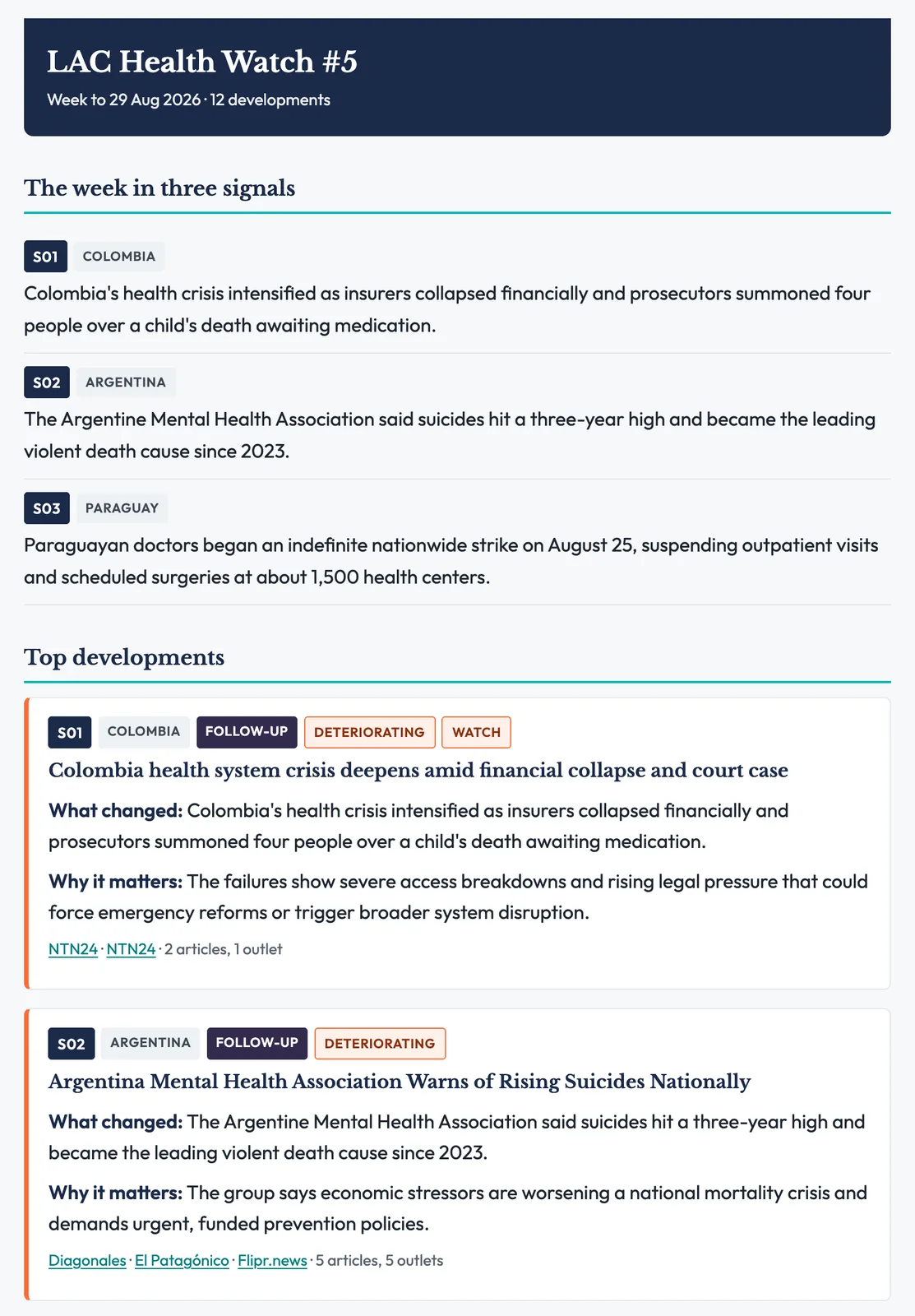
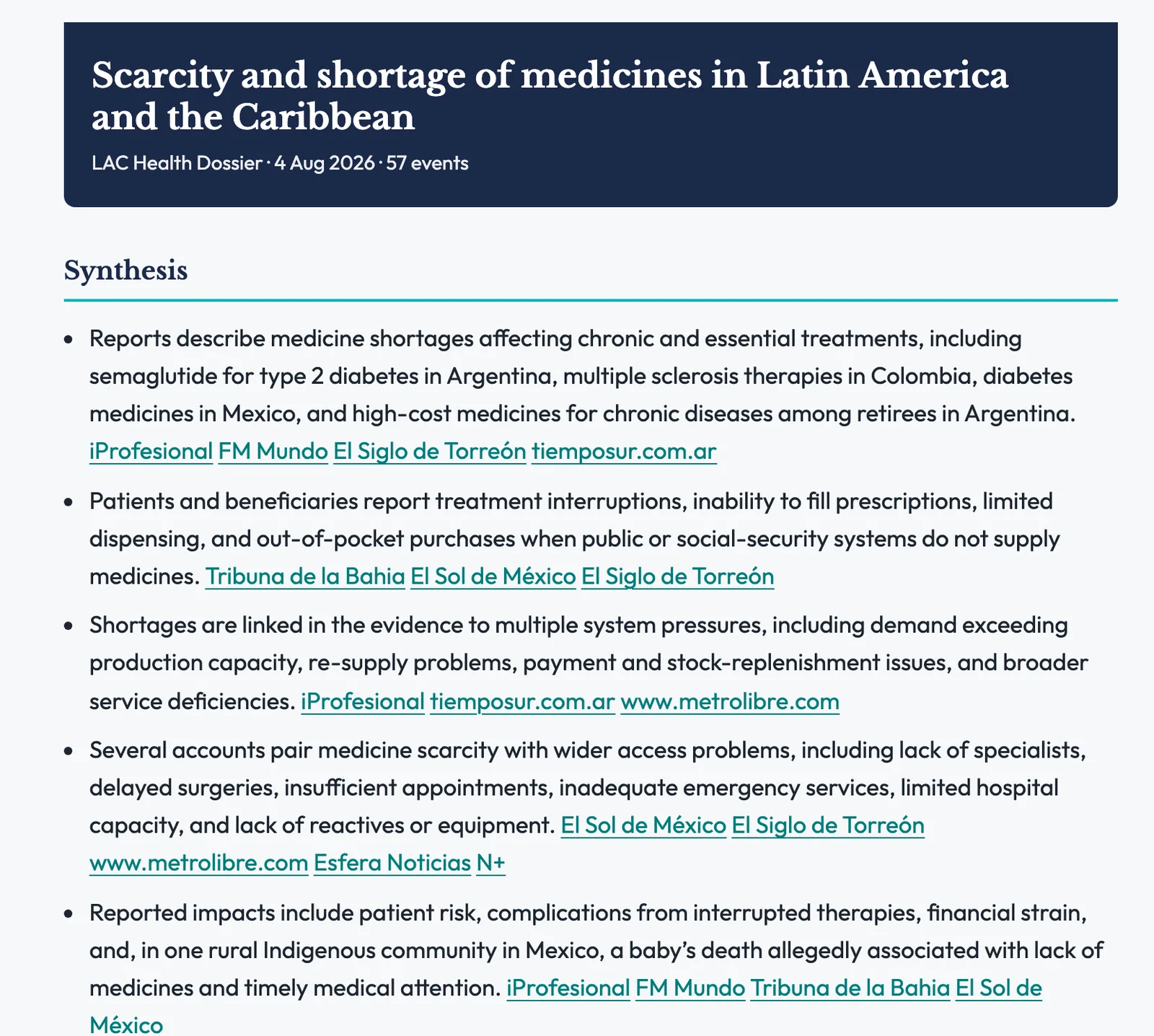
A pipeline that collected health news from 33 countries, picked the articles that mattered, summarised them and kept an archive of events.
Equipment
- GPT (GPT-5.4 nano and embeddings) AI models
- Jev AI models
- Python and uv Code and infrastructure
- Claude Code Harnesses and agents
- Claude (Opus 4.6 to 5.5) AI models
Results
On 600 replayed articles, TypeSafe's Jev was better than my GPT-5.4 nano triage gate at deciding which articles mattered: an F1 score of 0.969 against 0.901.
What I learned
A daily feed is only worth its cost if someone reads it every day. Running it on demand, when I had a clear question, worked better.
A small typed judgment was better than a general model at picking the articles that matter.
Lab notes
-
I retired the monitor and kept its archive of articles and events.
-
I tested TypeSafe's Jev against my GPT-5.4 nano triage gate on 600 replayed articles, and Jev scored an F1 of 0.969 against 0.901.
-
I switched it from scheduled runs to on demand, because the daily and weekly jobs cost more than the reading they produced.
-
I split the news pipeline out of my Substack writing project and made it its own tool, covering 33 Latin American and Caribbean countries.