 Johnattan's Laboratory
Building the lab: a design system and a website with AI
This site is an experiment too. With AI I designed a brand, a design system and a working website, from the first sketch to the last pixel.

Updated22 Oct 2026
The problem
I had dozens of personal AI projects and nowhere to share them. Decilion's website is for the company's work, and most of these projects have nothing to do with it.
What was out there
Website builders and portfolio templates would have made it look like every other personal site, and none of them is built around a running log of experiments.
What I built
This site: a brand, a design system with tokens and a contrast check, an illustrated lab, a logo, and a small build script that turns one Markdown file per experiment into these pages.
Equipment
- Claude Code Harnesses and agents
- Claude (Opus 4.6 to 5.5) AI models
- Codex CLI Harnesses and agents
- GPT (GPT Image in Codex) AI models
- Magnific Design and media
- Magnific MCP MCP servers
- Magnific One AI models
- WHO GHED MCP MCP servers
- Python and uv Code and infrastructure
- GitHub and GitHub Pages Code and infrastructure
How I built it
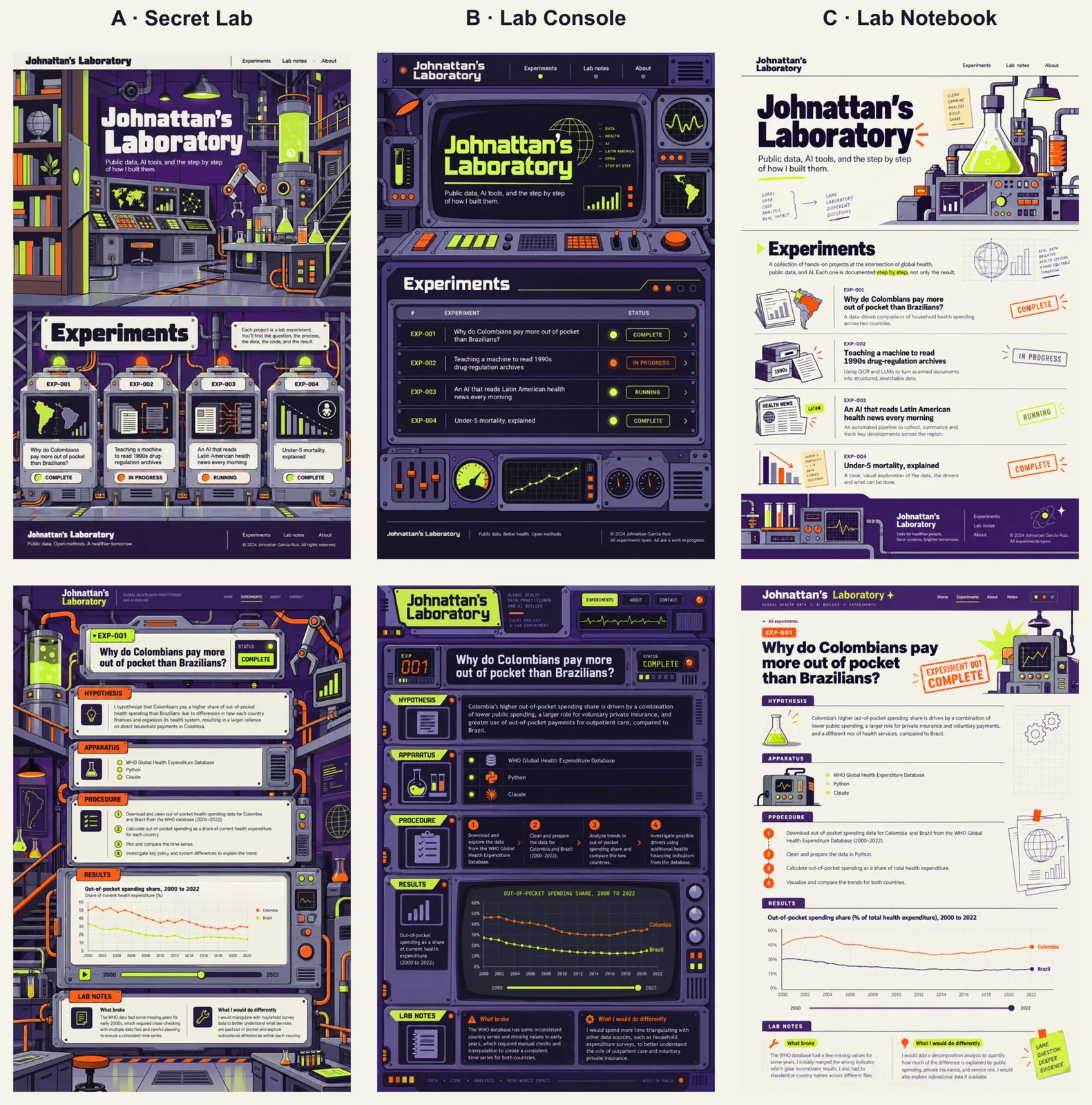
- I explored three visual directions as whole-page concept images before writing any code.
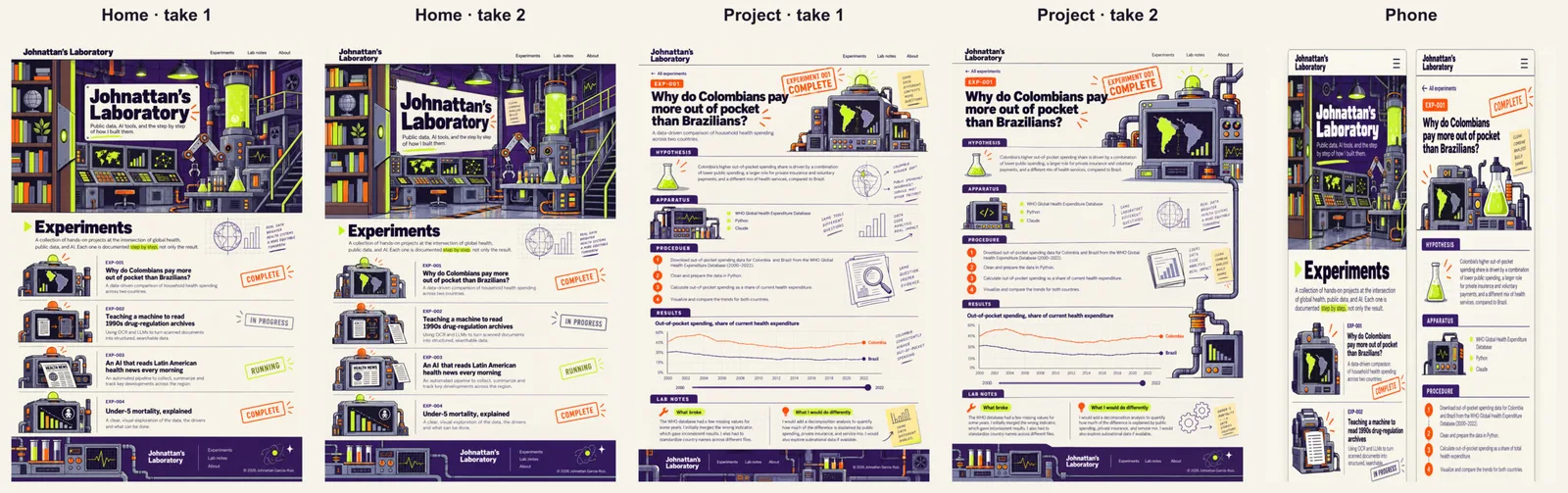
- I locked one combination as the visual reference and wrote design tokens with a contrast check.
- I generated the lab's artwork, then traced it to vectors and upscaled it in Magnific.
- I built the pages in plain HTML and CSS, generated from these notes by a short Python script.
What I learned
Real data catches invented content. The first concept images gave this site's first experiment the title "Why do Colombians pay more out of pocket than Brazilians?", and WHO data says the opposite.
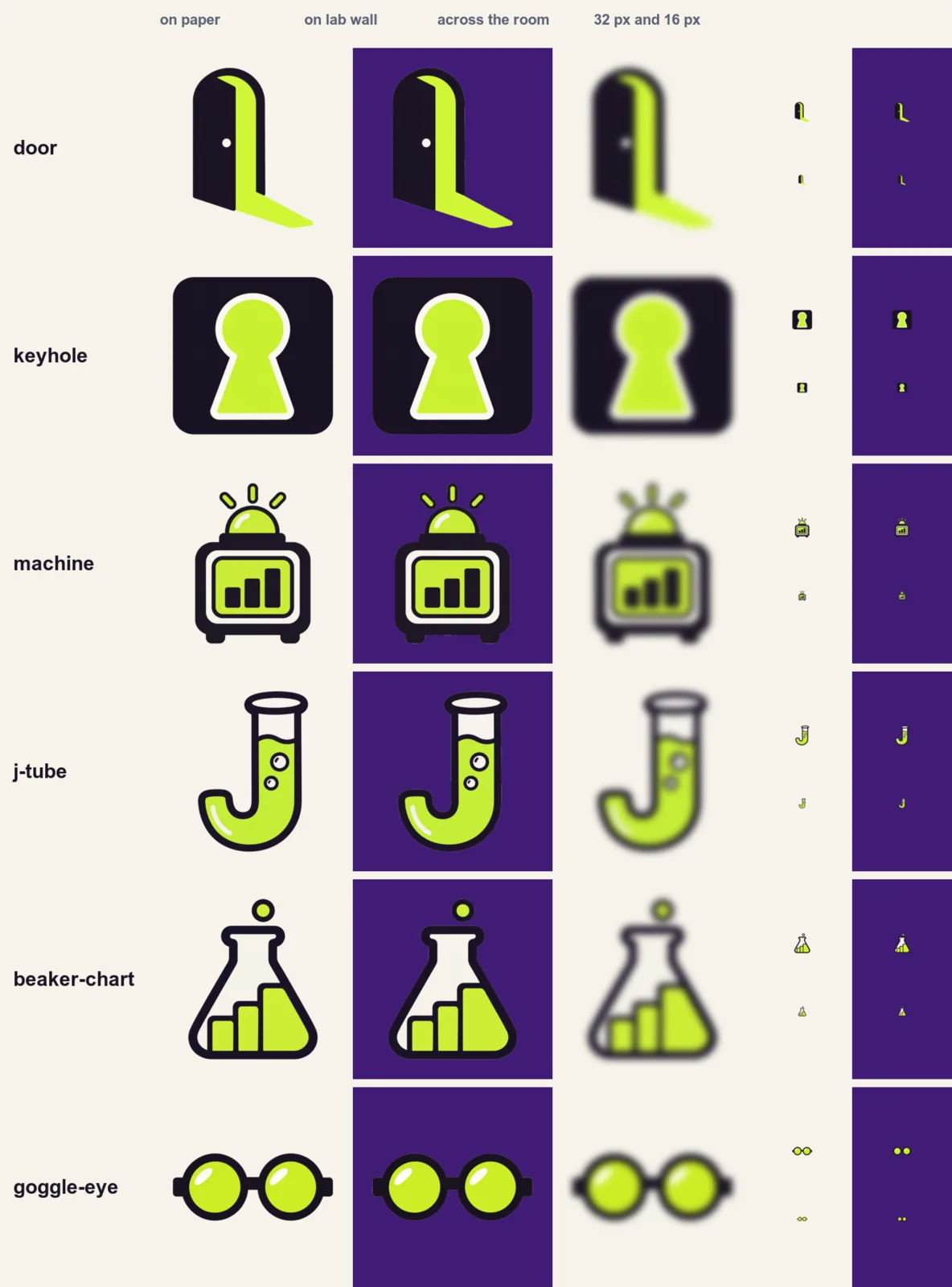
A logo has to survive being small and far away. I now test every mark blurred and at 16 pixels before choosing.
Lab notes
-
The equipment page is now a wall where every tool hangs as a plate with its logo or initials, and a pinned note opens with what I use it for and where. Model versions are grouped into one entry per family, and each entry links to its product, its source project or the experiment.
-
I moved the lab to j-garciaruiz.github.io/lab and rewrote every page in the first person, since this is my journal; the AI is still named wherever it did the work.
-
I turned the site into a lab journal with tags, lab equipment, these lab notes and an about page. Then I surveyed 219 project folders, picked 27 to write up, and reshaped every experiment page around the problem first: what I needed, why nothing out there was good enough, then what I built.
-
I built the design tokens with a build step that fails on any colour contrast below WCAG AA; it caught the bright orange stamps and the focus ring. In Magnific I set up a brand kit for the lab, traced the machines to vectors and upscaled the hero, and the J-tube won a test of six logo ideas on paper, on the purple wall, blurred at a distance and at favicon size.
-
I picked the concept, Johnattan's Laboratory: an original cartoon lab inspired by Dexter's Laboratory and kept fully separate from Decilion. Codex generated three visual directions, and I combined the notebook pages of one with the secret-lab hero of another.